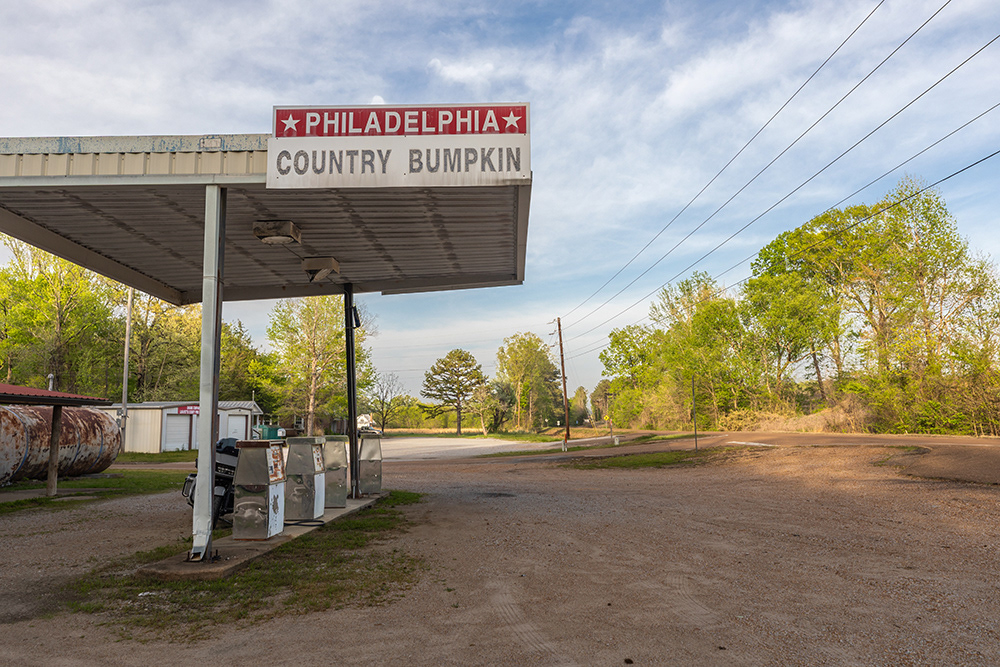
Halfway between Oxford and New Albany, at the corner of Highway 30 and County Road 249, stands the now-closed Country Bumpkin store and gas station. Less than a mile north of here along CR 249, a dirt lane leads to Greenfield Farm.
The Philadelphia Community Center, across the street, is where locals now gather for meals, cards, and dominos. The building was once the home to the Philadelphia School, which served first through eighth graders. The school closed around 1980.
Country Bumpkin, where neighbors and travelers bought gas, burgers, and pizza, closed around 2005. In 2024, Mike Tutor, a utility lineman instructor at Lafayette County High School, bought the property.
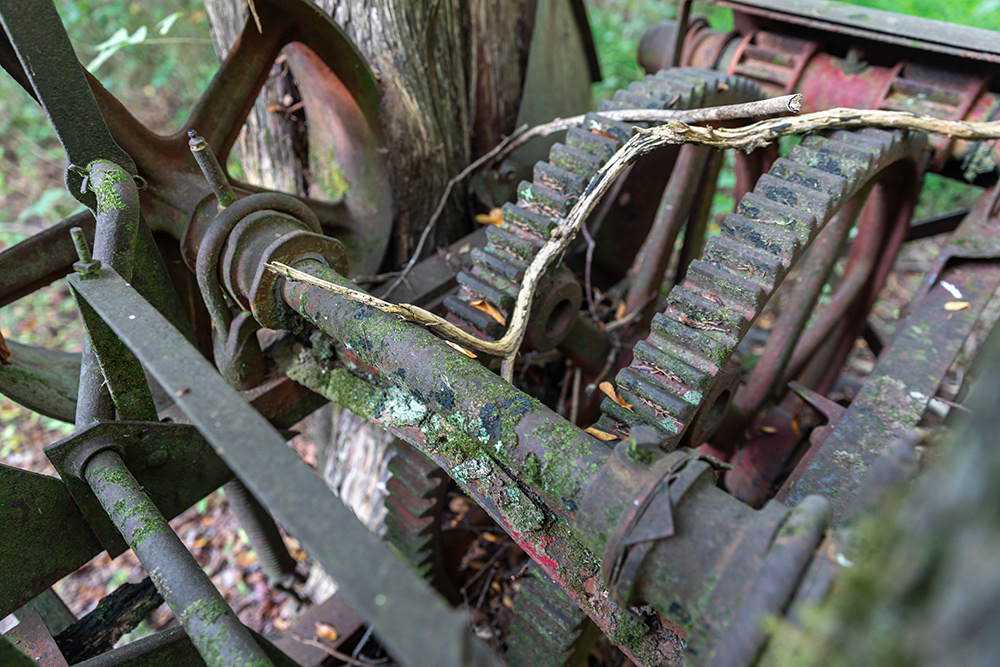
These large gears and flywheels once powered a plunger that shoved hay through a chute and into a chamber where it compressed into bales. Farm animals ate the hay during the winter when the pastures and fields were bare. Hay was also used as bedding for pigs, chickens, and cows.
These gears have not spun in more than sixty years. Decay has left its patina. Moss has grown. After the writers residency opens, the baler will remain, an artifact of the days when this was a working farm.
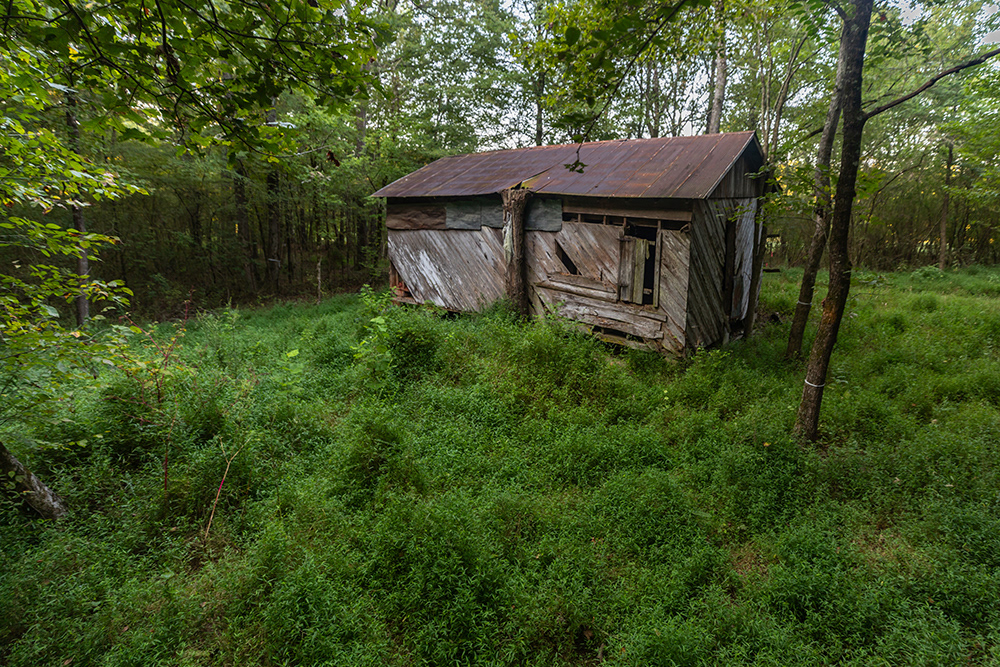
The corn crib is the only building from the farm that is restorable. It stands between the walkway and a branch of Puskus Creek. The Japanese smartweed and stilt grass that surround it were introduced to Mississippi in the early 1900s. The smartweed was an ornamental landscaping plant. The stilt grass was used as packing material for fragile goods like porcelain. Both are now considered invasive.
Corn was not a cash crop when William Faulkner purchased the farm. It was used for livestock feed and was the key ingredient in making homemade whiskey. “The home production of spirits was widespread,” explains Jim Gully, who researched the history of Greenfield Farm, “nowhere more so than in Beat Two.” While most of the U.S. voted to repeal prohibition, Mississippi remained dry until 1966, four years after the death of Faulkner.
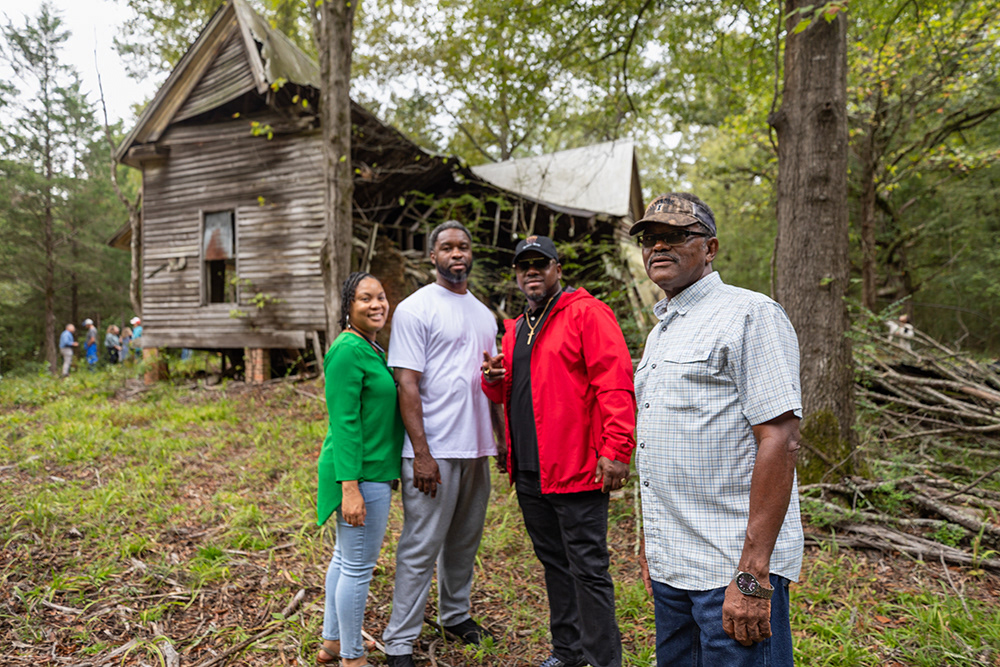
Charles McJunkins, Sr., and his wife Sallie McJunkins likely lived on what would become Greenfield Farm by 1910, when they were recorded present in the U.S. Census. They had nine children, including at least five who lived and or worked at Greenfield Farm: Charles “Charlie” McJunkins, Jr., George McJunkins, Henry McJunkins, Enis McJunkins, and Arenza “Renzi” McJunkins. Charlie's sons Alvis McJunkins and Starling McJunkins are also recorded in Greenfield Farm’s records.
The brothers left rural Lafayette County to fight in World War II and returned after the conflict ended. After the war, Faulkner paid farm workers $2.50 per week. He eventually entered crop lease agreements with Renzi McJunkins and Alvis McJunkins that gave Faulkner 25% of their cotton and corn crop in exchange for access to the land. The McJunkins family impact on the property echoes to this day. I took this picture at the 2nd Greenfield Farm Plein Air Invitational. While inspecting the back of the farmhouse, I photographed these descendants of Charles Sr. and Sallie, left to right, Tabitha McJunkins, Shalamar McJunkins, Kelvin McJunkins, and Charles McJunkins.
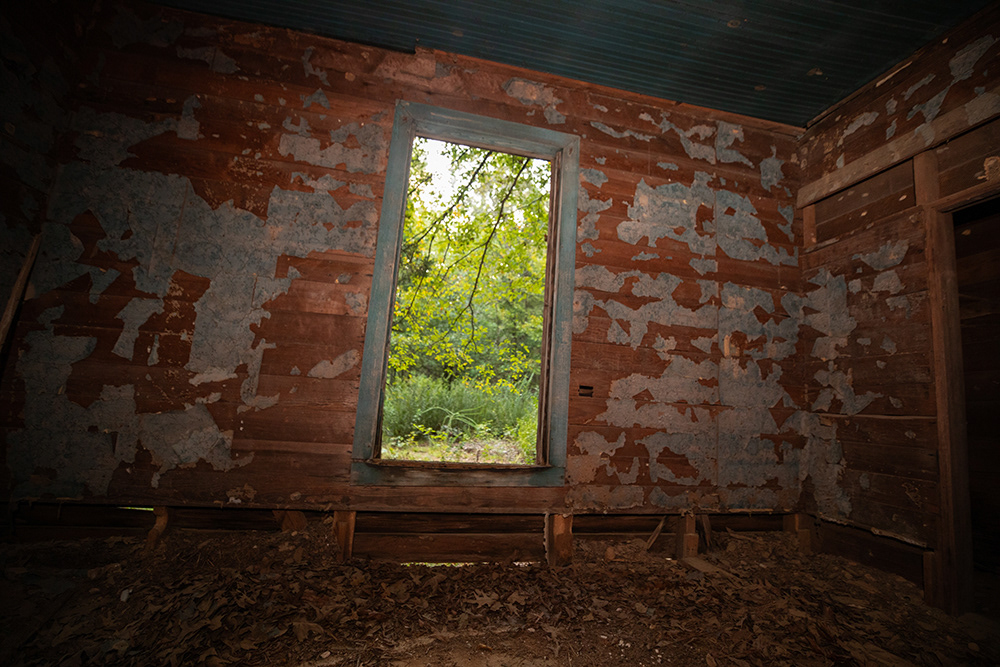
F.C. Parks bought what we know as Greenfield Farm in 1875 and likely built the farmhouse in the late 19th or early 20thcentury. In 1919, his grandson Joe Parks sold the property to G.H. Cannon, who lost the farm to foreclosure. William Faulkner acquired the land in 1938. He chose his younger brother John Faulkner, known to family as Johncy, to manage Greenfield Farm. From 1938 to 1940, Johncy lived in the farmhouse with his wife, Dolly, and sons, Jimmy and Chooky. They made renovations and repairs.
After his mother Maude won him an appointment as an engineer for the local branch of Works Progress Administration, Johncy moved back to town. Around 1946, William Faulkner chose Renzi McJunkins to manage Greenfield Farm. Renzi often shared the house with Bertha McJunkins, the widow of his brother George, and their son Tommy. We may never know who from the Parks, Cannon, Faulkner, or McJunkins families chose the wallpaper that splotches this wall.
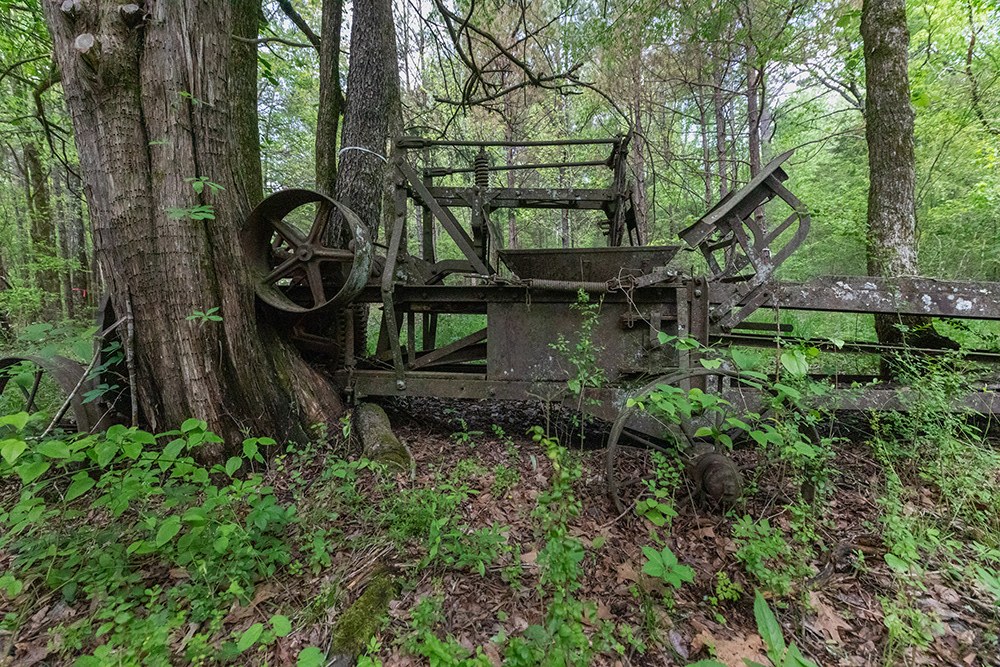
Hay balers became farm staples in the 1930s as the agricultural economy mechanized. Faulkner purchased the property in 1938. His brother John “Johncy” Faulkner, who managed the farm until 1940, hoped they would raise something practical, like beef cattle. At a time when so many farmers were converting to tractors, William Faulkner wanted to raise mules. This machine was likely already in service when Faulkner purchased the farm. Today it is caught between a cedar tree, a cherry tree, and smaller elms.
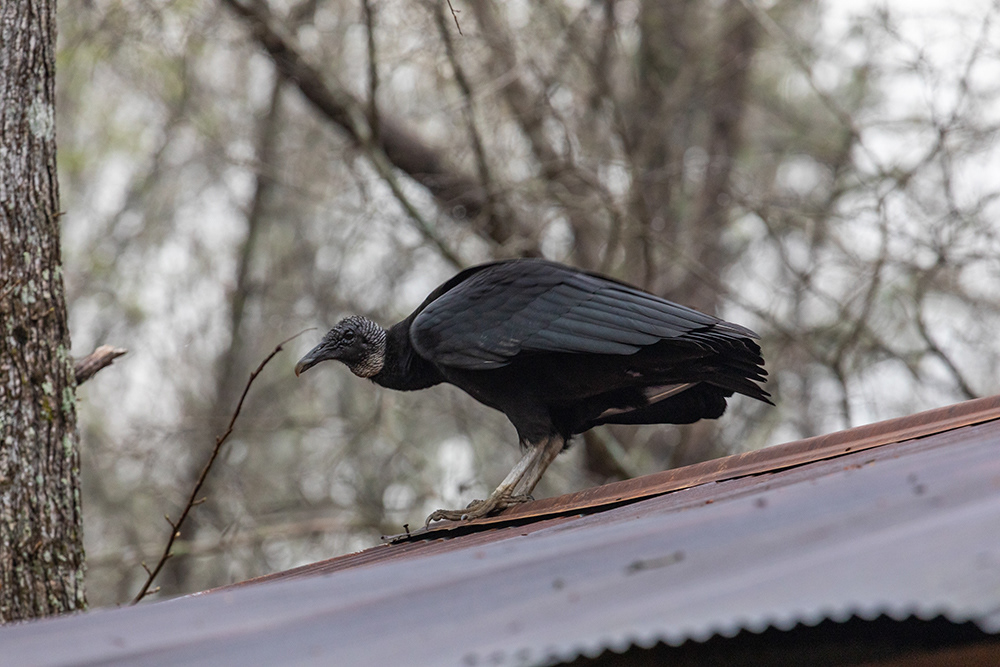
The buzzard is the symbol of Greenfield Farm. In The Paris Review, Faulkner said that he admired the birds so much that he hoped to return as one if reincarnated. Over the year I photographed Greenfield Farm, I came to think of the birds, bugs, flowers, plants, trees, even the light, as spiritual forces. I captured them in a tender window of time. This informed how I viewed my work at the farm. I felt lucky to get to know a place that was about to become another place. It made my time there matter.
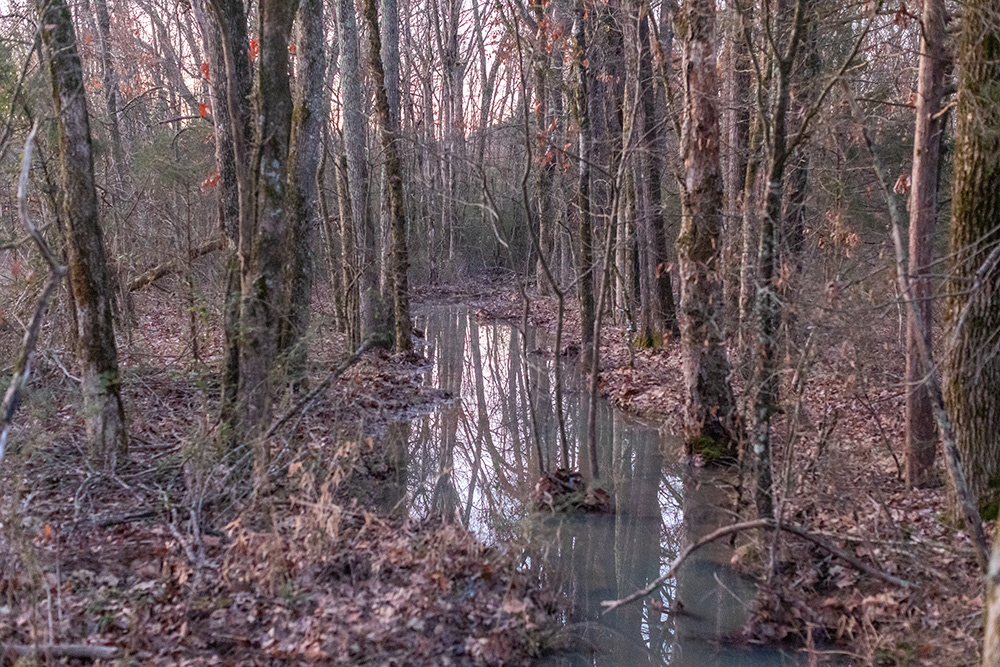
Puskus Creek travels nearly eleven miles across the Holly Springs National Forest. Branches wrap around the east side of Greenfield Farm, fed by underground springs from early January to late June. When I began to document Greenfield Farm in 2025, I was attracted to the prospect of focusing on one place for a complete year, season by season. This allowed me to document landscape changes over time. This creek was a good subject for that study. When I began in the winter, the mixed bottomland hardwoods were mostly bare. Their fallen leaves covered the ground. By June, green leaves, grasses, and weeds dominated the area and blocked much of the creek from view.
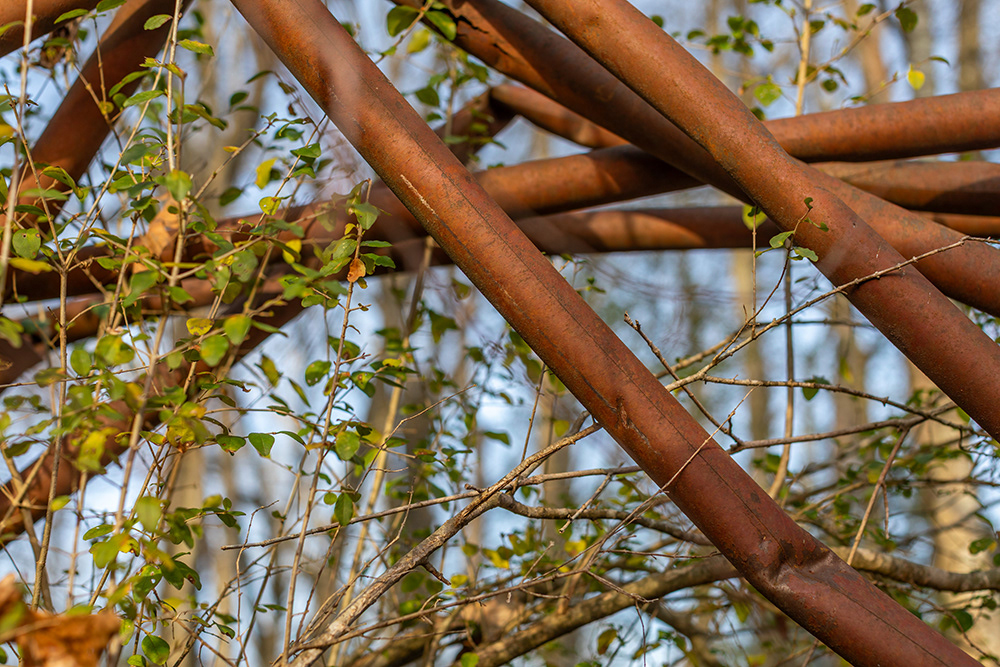
There are two gates near the entrance to Greenfield Farm. Those gates and some barbed-wire fencing once confined mules, horses, pigs, chickens, beef cattle, and milk cows. Neither are functional today. The gate in this image, twisted into a sort of helix, was tangled with privet.
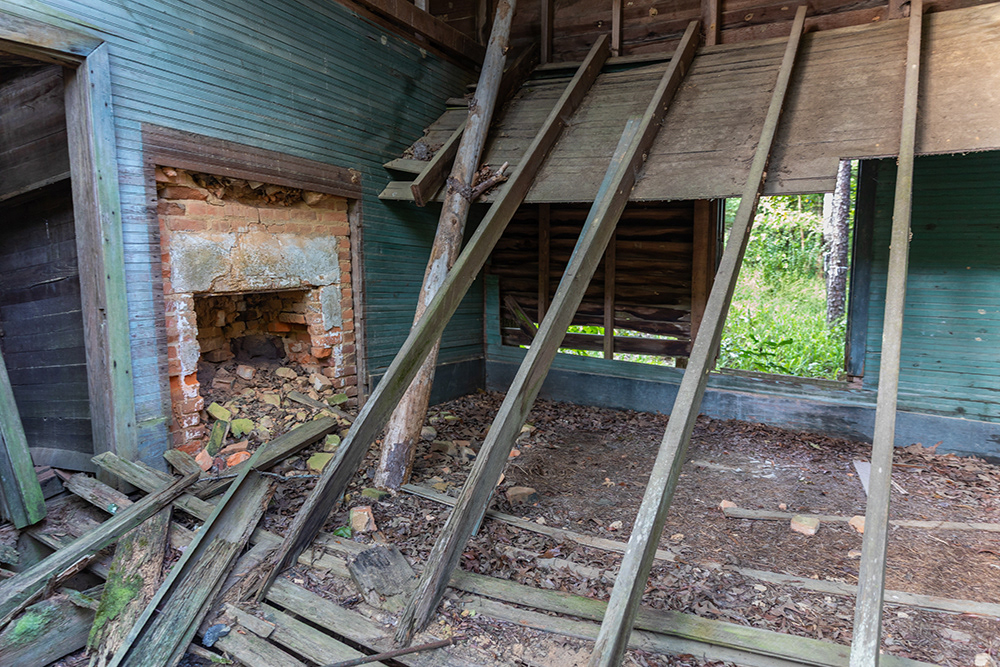
Walking through shambles of the farmhouse, the weight of its ongoing collapse dangled overhead. There was always the chance I would fall through what floor remained. Or the roof would collapse on me. Remnants caught my eye—fireplace bricks, blue paint, shattered glass, fragments of floral wallpaper. Still, the structure was bathed in a strange beauty that felt inviting. No matter the danger, I always felt welcome to walk through the house.
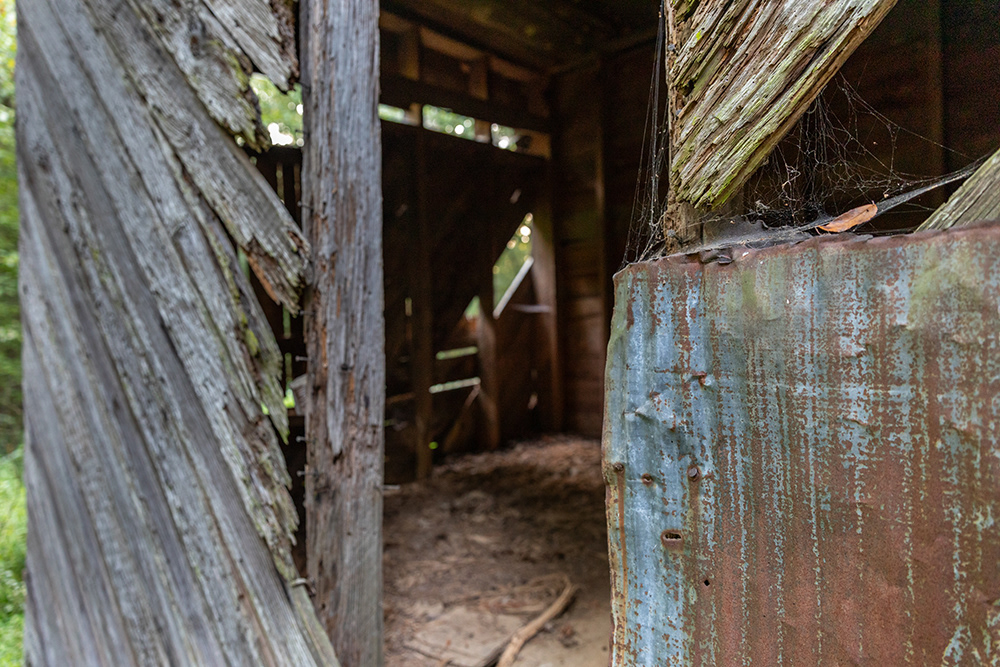
The corn crib contains two rooms. Inside the room closest to the gate, I found yellow chairs and an empty bottle of white port. The room closer to the hay baler was nearly bare. Dust, dead leaves, and corn cobbs littered the floor. Before construction, this was where the black buzzard slept. The corn crib, once restored, will be a bridge between this onetime mule farm and Greenfield Farm Writers Residency. Vestiges like this can be as inspiring as the brilliant quiet of the landscape.
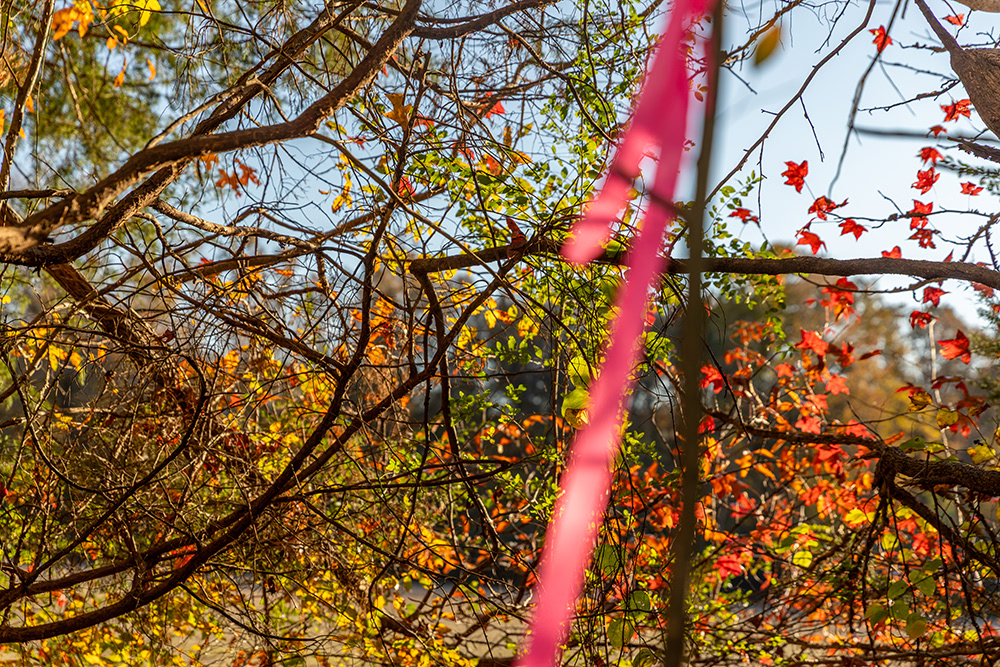
In December of 2024, I first noticed a survey flag, tied to a stake that read Cabin 2. By March of 2025, dozens of white and pink flags had been tied to trees, marking which trees to retain and which to thin out. Some will have to go to make space for the four writing studios, the gathering shed, and a residency manager house. The landscape plan, developed by Native Habitats of Flora, Mississippi, aims to honor this now wild place. I look forward to seeing how Marlon Blackwell Architects and Native Habitats balance and blend new construction and the current landscape.
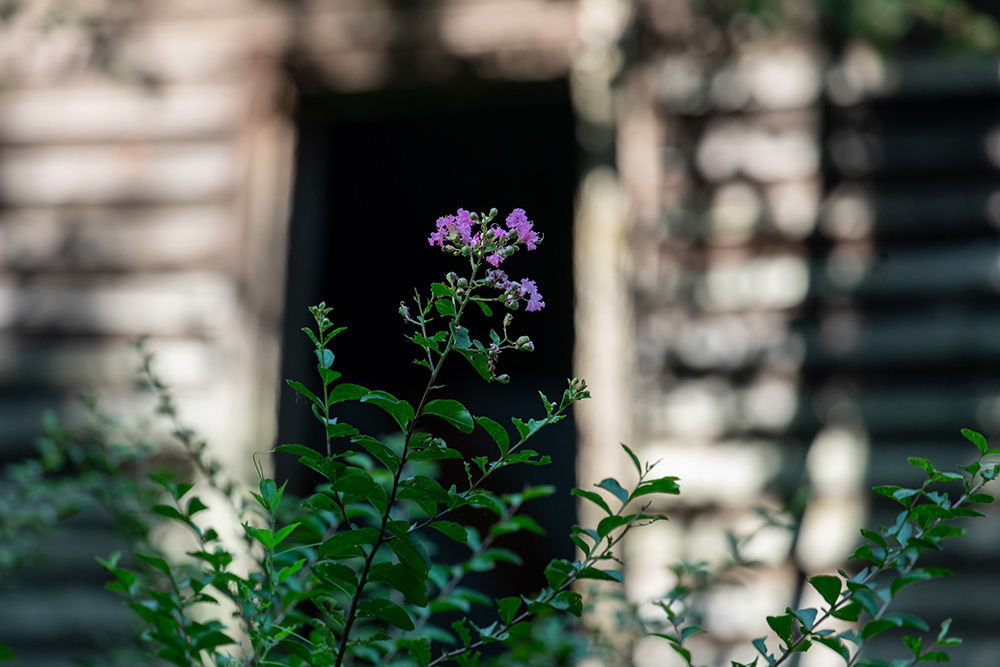
Lavender crepe myrtle bloomed throughout the summer at Greenfield Farm. Like the English daffodils that surrounded the farmhouse in late February, these trees were not native to Mississippi. They originated in southeast Asia and were introduced to America around 1790. They thrive in Mississippi because they love heat.
The presence of crepe myrtles, as well as daffodils and pink roses, hinted at the past when occupants of the farmhouse planted ornamentals. These domestic gestures helped me picture the farm as a home. These flowers made me think of the people who planted them long ago.
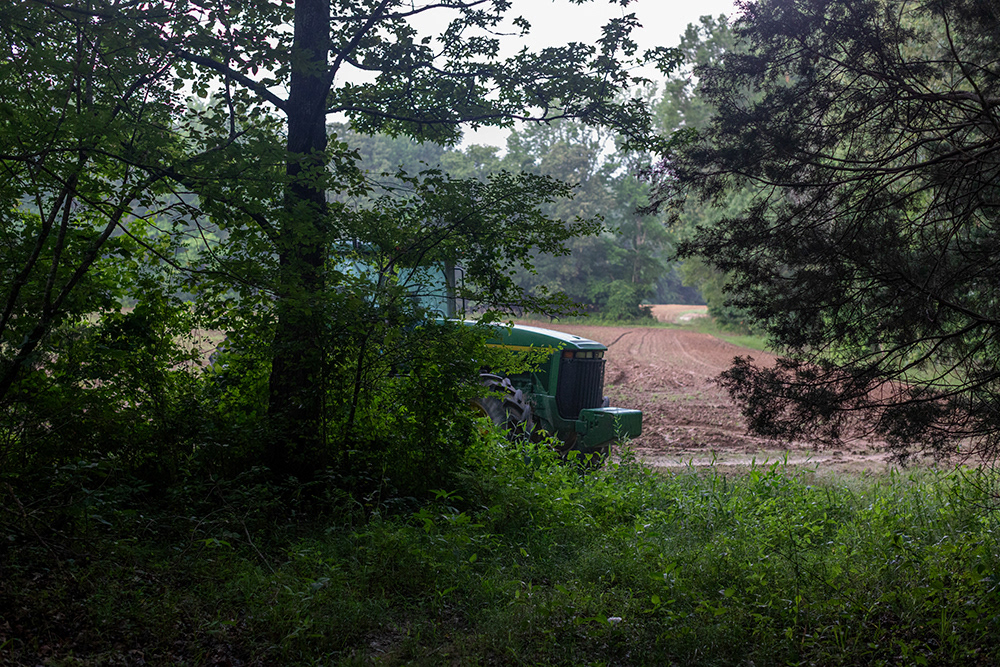
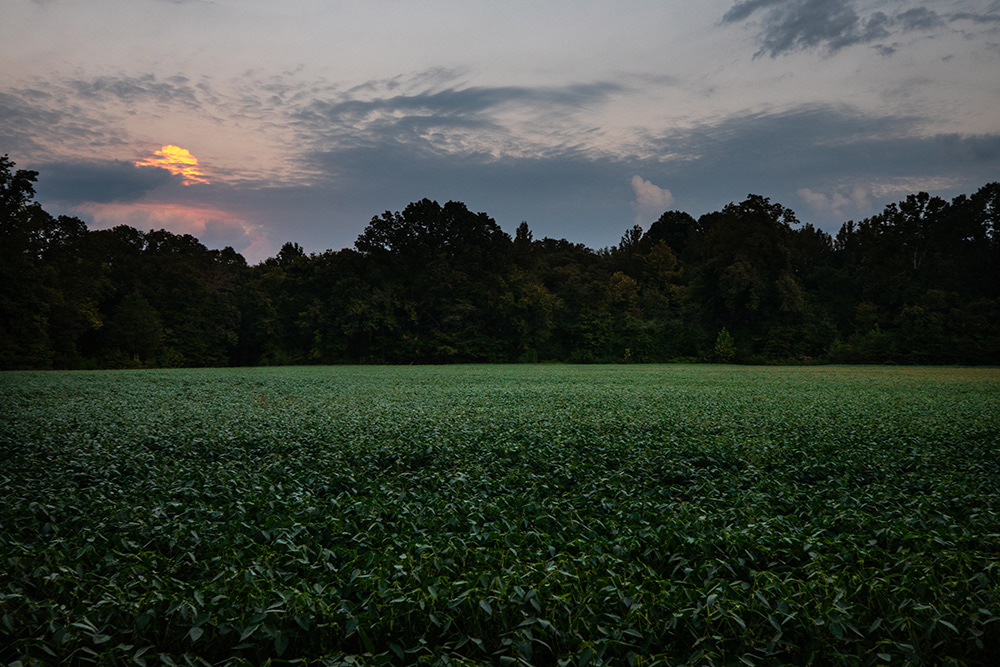
I visited Greenfield Farm 30 times in 2025, capturing, among other scenes, the crop cycle of soybeans growing on a big bottomland field owned by Jerry A. Morrison since 1988. This was the only tractor I saw. During the years Faulkner owned Greenfield Farm, the rich bottomland fields yielded cotton, corn, and hay. The commissary was stocked like a general store. Faulkner furnished tractors, mules, tools, and seeds for farming. Faulkner respected this work and the people who did it, keeping detailed ledgers of income, expenses, wages, and harvests.
In 1950, a Swedish reporter called Rowan Oak to give William Faulkner the good news that he had been awarded the Nobel Prize for Literature. When pressed about the necessary journey to Stockholm for the ceremony, Faulkner said, “I won’t be able to come to receive the prize myself, it’s too far away. I am a farmer down here and I can’t get away.” Faulkner did eventually travel to Sweden to receive the award. But he was indeed devoted to farming this plot of land.
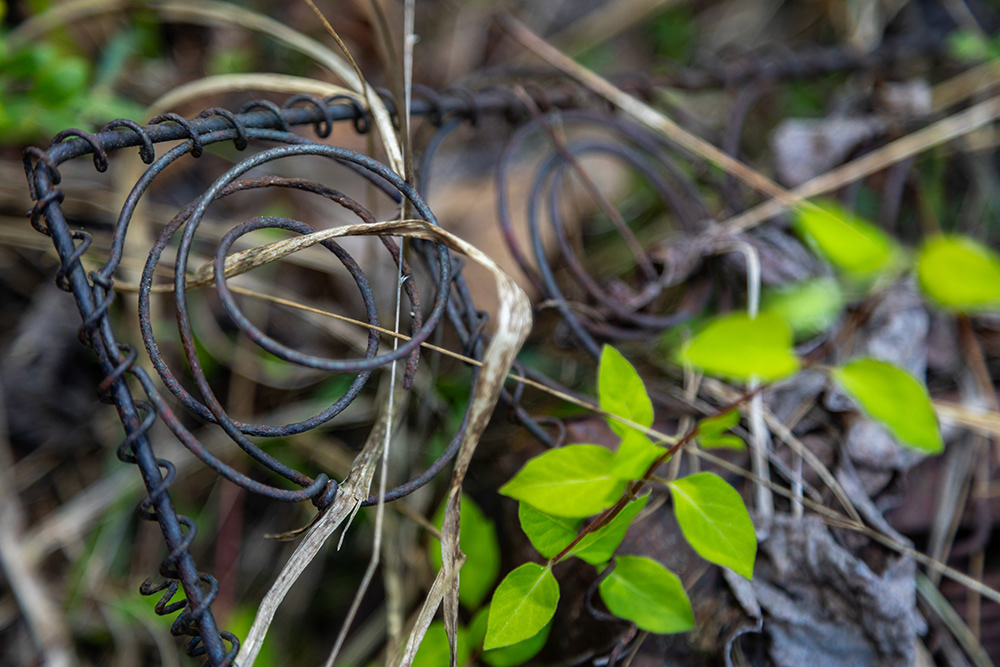
Just beyond the farmhouse, Faulkner built what he called a hunting lodge. He stayed here when at Greenfield Farm. While Faulkner probably never brought his typewriter to the property, it is likely he wrote longhand pages for works like The Hamlet, Go Down Moses, and Intruder in the Dust at the lodge. The structure burned around 1990. All that remained when I walked the land were stacks of bricks and the coils of a mattress spring.
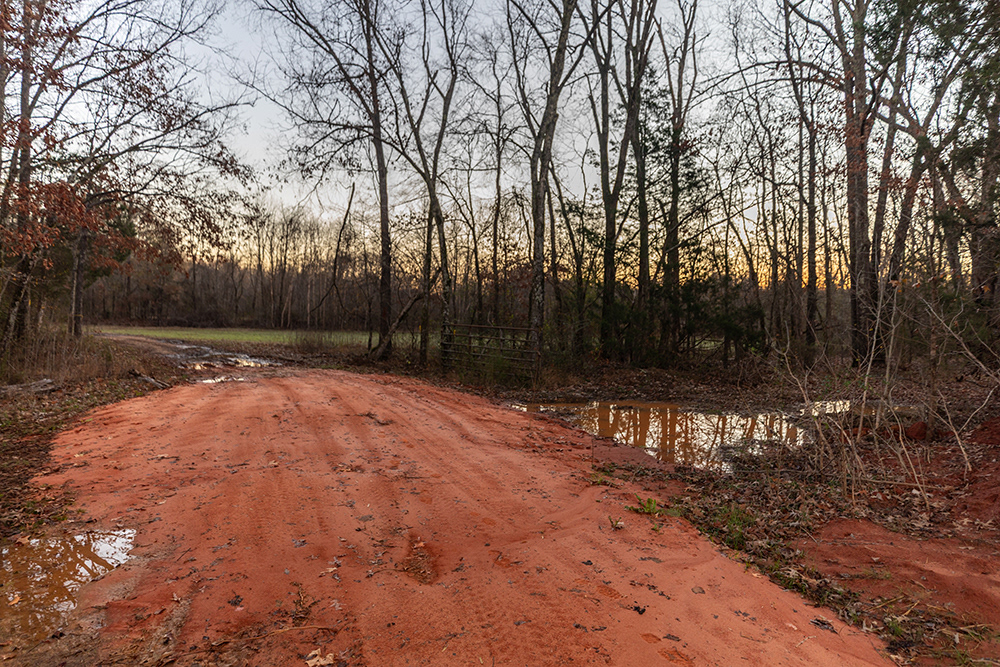
A neighboring farmer deposited this red clay at the entrance to the farm in October of 2025. The aim was to improve traction for visitors. The rich red color, owing to high iron content, reminded me of the fireplace bricks in the old farmhouse, also made from Mississippi clay. I loved the colors here. Red dominated the foreground. And brown puddles reflected trees and light, which stretched my vision toward the pale sky. The greens in the distant field pulled my gaze down toward the gate.
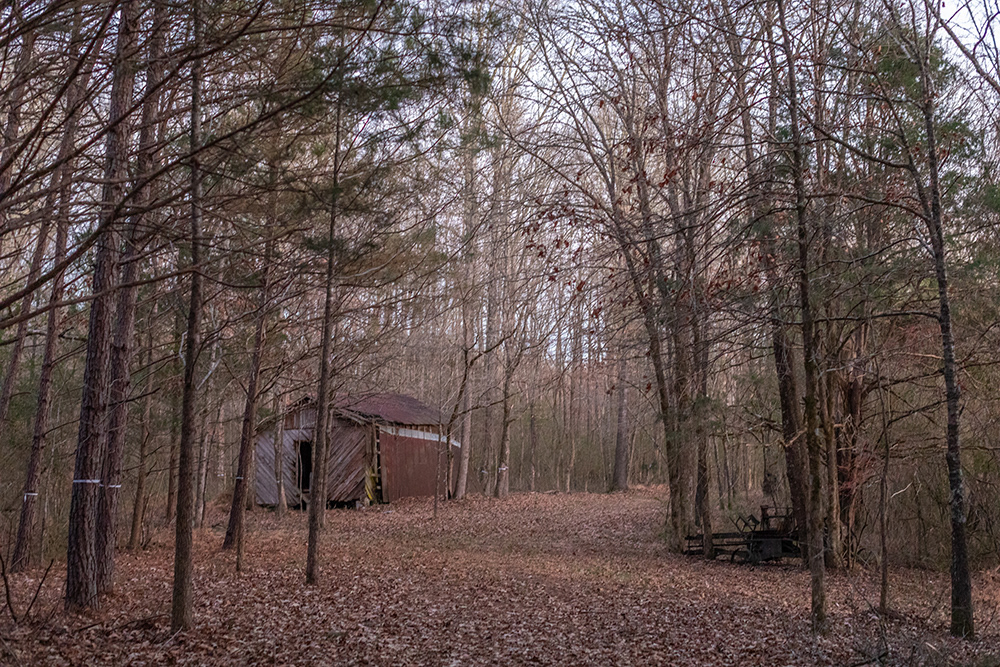
The hay baler and corncrib are survivors of Faulkner’s mule farm. They connected me to the past. I imagined how the crops were gathered and how the machines worked. Nearby is the site of the old barn, the remains of which I never uncovered, not a nail, not a board. This is the view I saw on my last visit to the farm, walking from the farmhouse toward the gate. Many of the pin oaks had already been surveyed and tagged, awaiting what is to come.
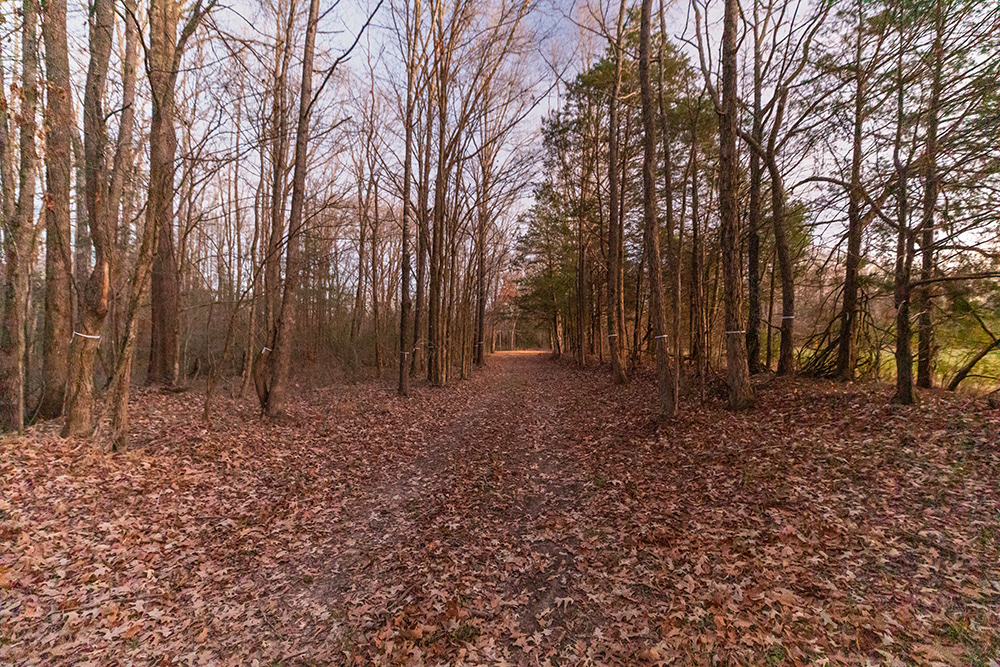
Trees created a sense of solitude at Greenfield Farm. They lined the walkway and gave me hundreds of reasons to look up. The landscape offered long views down the walkway and across the soybean field, but much of the view was broken by trees, including southern sugar maple, river birch, ironwood, mockernut hickory, eastern redbud, flowering dogwood, white ash, eastern red cedar, sweetgum, tulip poplar, red mulberry, hop hornbeam, loblolly pine, sycamore, Mexican plum, black cherry, and red oak.
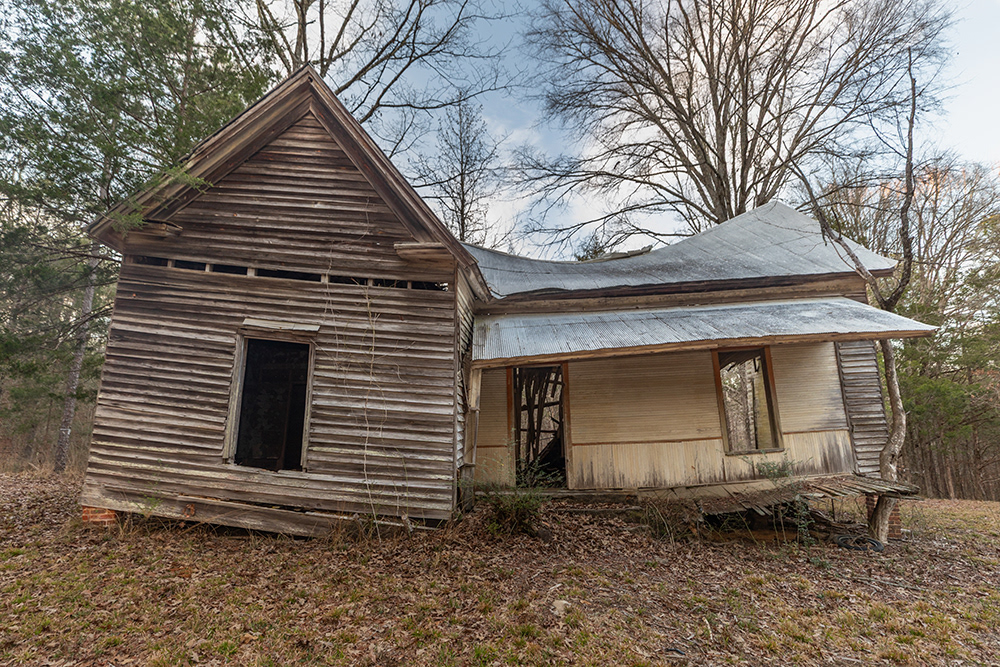
In the Journal of Mississippi History article “Greenfield Farm: Faulkner, Mules, and Time,” Jim Gulley documented Rowan Oak in Oxford as the place William Faulkner wrote short stories and novels and rode horses. He and Estelle threw lavish parties there for their friends. Life at Greenfield was different. There, Faulkner acted like a country farmer, raising mules, making notes in a studbook, riding a tractor, and sipping moonshine from a jug. Parties on the farm were simple barbecues, not elegant dinners. Estelle rarely visited Greenfield.
William Faulkner fell from his horse Stonewall on June 17, 1962. Eighteen days later, he died at Wright’s Sanatorium in Byhalia, Mississippi. His daughter Jill Faulkner Summers inherited Greenfield Farm. She then lived in Virgina. She was devoted to her growing family and to the equestrian community in Charlottesville. She held onto Greenfield for eight years. Two months after Renzi McJunkins died on December 15, 1969, Jill sold the farm to her cousin, Jimmy Faulkner. He had lived on the farm when his father Johncy managed the property. Jimmy Faulkner made the farm accessible to the University of Mississippi. Evans Harrington and Ann Abadie, co-founders in 1974 of the Faulkner and Yoknapatawpha Conference, began to lead conference field trips to the farm. Those trips continued after Jimmy sold the property to Malcolm Reese in 1982. The First National Bank of Oxford foreclosed on the land in 1983. In 1990 bank president Billy Gottshall sold a 20.43-acre parcel of the original 362 acres to the University of Mississippi Foundation. That parcel will become Greenfield Farm Writers Residency.